
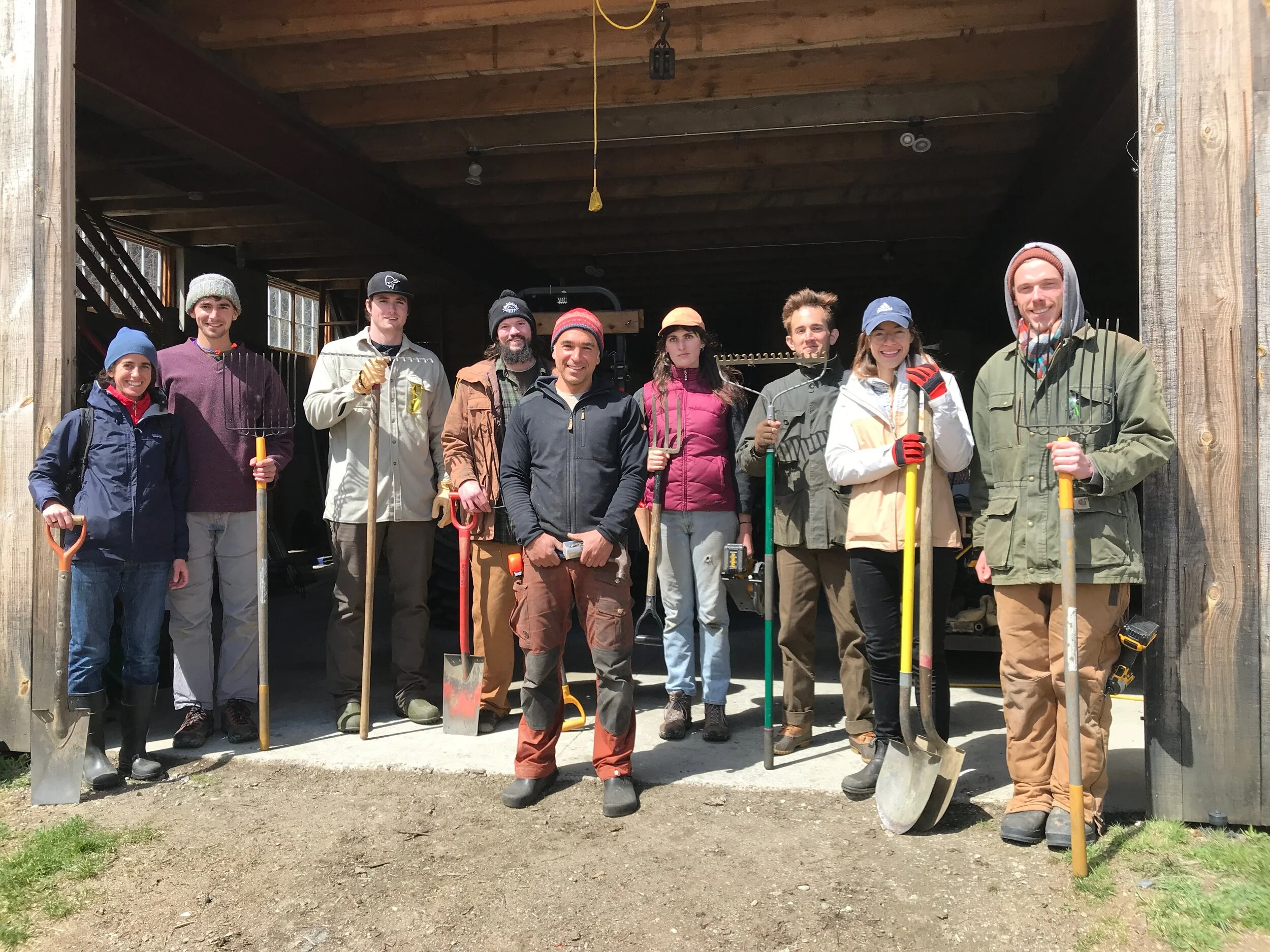
The 2021 Apprenticeship covered a lot of ground! Projects we worked on, and highlights included building a sandbox for the local school…
Read More
What's the only grain crop that's been grown on steep land for centuries without destroying the land or exhausting infertility? The same crop that feeds more people than any other. Why aren’t we growing rice in Vermont?
Read More
Now as we walked among the chestnut giants I breathed a sigh of relief. This much we know is possible. It's been done before. The castagnetu (chestnut food system) is real. It's a cultural possibility for all of us that can plant and tend to tree crops and graze their understory.
Read More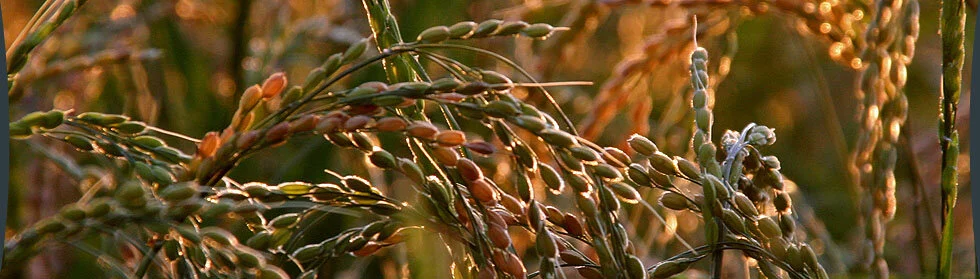
Taken as a whole, this expanding diversity allows us to increase the resilience of the human ecosystem and its ability to cope with change. The work of plant and animal breeders throughout time has dwindled in the face of industrial, simplifying agriculture…
Read More
Good design is design for change. Good design is structurally diverse and not depend on any single element for its overall success. This article briefly overviews strategies for developing biologically – adaptive, intentional ecosystems (permacultures) and climate-buffering landscapes (microclimates) in which humans can build homes, produce food, and live well, in a future of greater adversity, or not.
Read More
The background of all of our work is healthy soil. And rapid topsoil formation has never been more urgent than it is today. Most of our projects and a large proportion of the work undertaken at the WSD Research Farm have a soil formation component built into the project.
Read More
Traveling in New Zealand by bike over the past couple of weeks has been inspiring, surprising, and mind-stretching. The stories here are both new and old: one of the most recently settled places on earth — a land being colonized, a world rapidly changed, abundance and destruction in parallel.
Read More
An edible honeysuckle popular in northern Eurasia for centuries. Why haven't we been growing them here?
Read More
Step 1: At great expense, locate ancient energy reserves deep within the earth's crust. Step 2: at great expense, develop and deploy tools to access these reserves…
Read More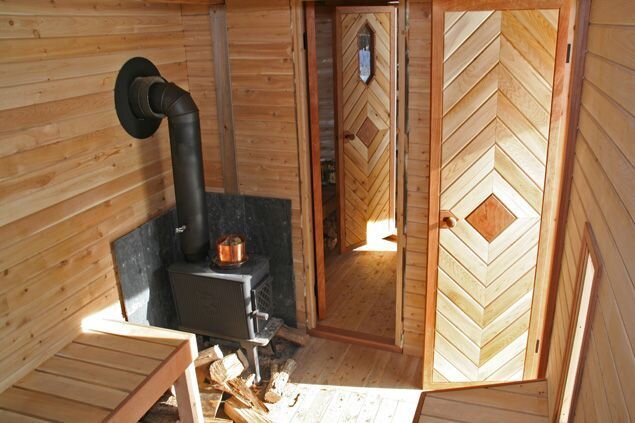
Microclimates usually exist unintentionally in “nature”; good design creates microclimates intentionally. Since crafting the microclimate of a site is often forgotten and especially important in cold climes, we research small-scale climate development through many of our projects and especially at our proving ground in Moretown, Vermont.
Read More
In an effort to advance home heating security, fuel security, and forest sustainability in Vermont, New England (and the cold climate world in general) WSD is conducting research and development on the production of concentrated fuelwood via rapid biomass producing hedges.
Read More
Falk and his network of young University of Vermont graduates are not traditional environmentalists. In fact, he calls mainstream environmentalism, with its "nihilistic," minimize-human-impact approach, one of the "largest hurdles we face toward being a good community member of the earth again."
Read More